
The Covenant Code: Bob Dylan's Biblical Cipher and His Jewish Soul
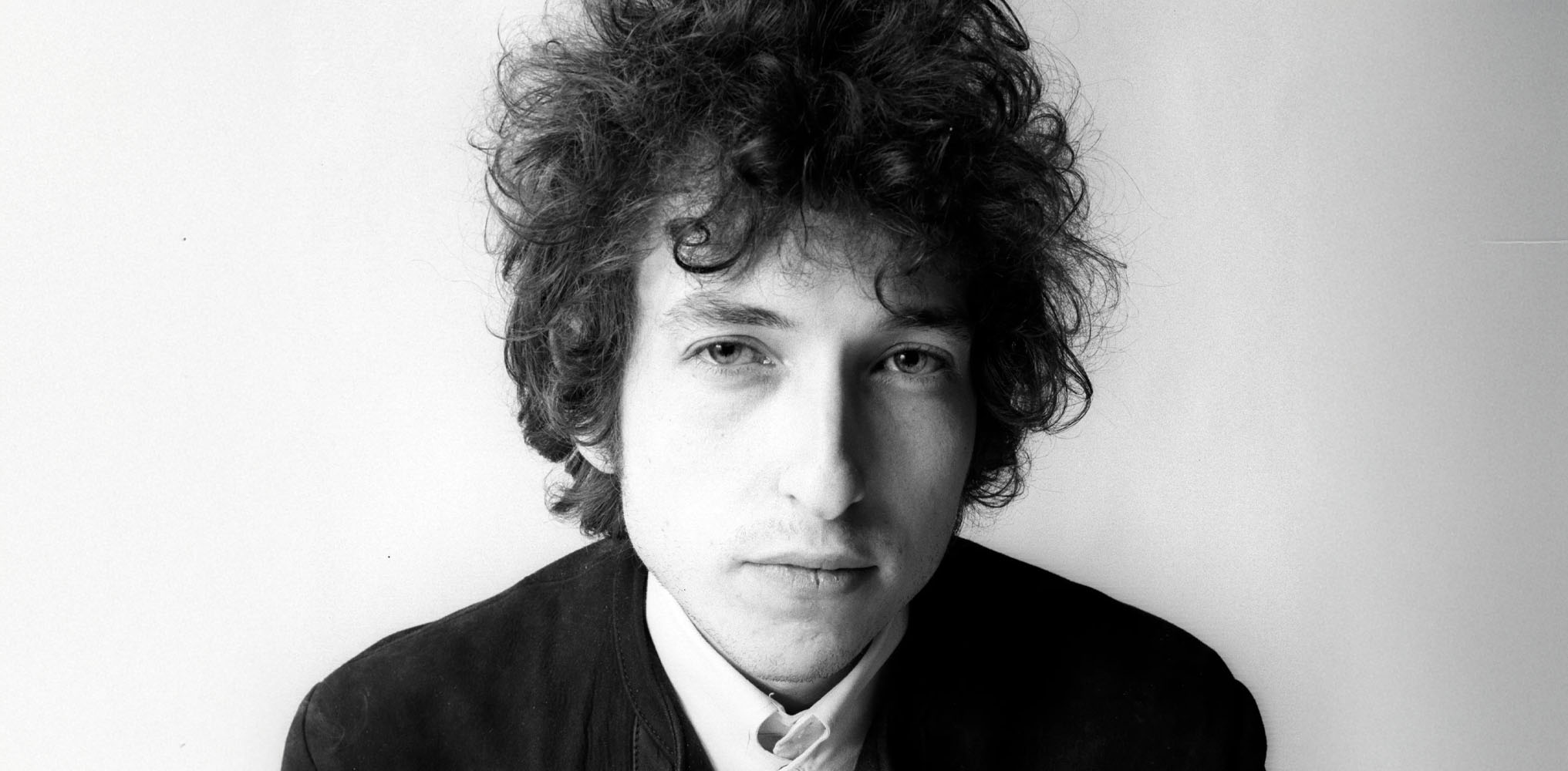
The Boy from Hibbing Who Became G-d's Voice
It all began on Highway 61. Not metaphorically — quite literally. Highway 61 stretches from the Canadian border through Minnesota all the way down to New Orleans, and somewhere along this asphalt spine of America lies Hibbing — an iron-mining town where, on May 24, 1941, Robert Allen Zimmerman was born. Grandson of Jewish immigrants from Odessa and Lithuania, son of an appliance store owner, a boy from the Agudath Achim community where his bar mitzvah took place in May 1954. And if you think this is just biographical trivia, you have understood nothing about Bob Dylan.
Because Highway 61 is not just a road. In Genesis, chapter 22, Abraham is commanded to go to the land of Moriah — and in Dylan's song "Highway 61 Revisited," G-d tells Abraham to "kill me a son," Abraham asks where, and G-d answers: "On Highway 61." The album is not just an album — it is a Midrash. From the first second of the title track, a police siren whistle sounds — credited in the album liner notes as "Police Car," performed by Dylan himself. Some interpreters compare this sound to a shofar, but on the recording it is unmistakably a police whistle.
Dylan never called himself a Jewish artist. He resisted all labels with the same fury the prophet Jonah fled his calling. Yet his entire poetics is saturated with the Tanakh the way parchment is saturated with Torah ink — not decoration, but substance. Scripture did not "influence" Dylan. Scripture is the air his songs breathe.
"All Along the Watchtower": Prophecy in Three Chords
Take perhaps his most famous song — the one Jimi Hendrix turned into an electric apocalypse. "There must be some way out of here, said the joker to the thief..." It sounds like an absurdist parable. But open the book of Isaiah, chapter 21:
"For thus has the Lord said to me: Go, set a watchman; let him declare what he sees. And he saw a chariot with a pair of horsemen... And he cried, like a lion: My lord, I stand continually upon the watchtower by day, and I am stationed at my post all night."
Dylan almost literally transcribes the scene: two riders approaching, the watchman on the tower, the wind howling, the wildcat growling. Only in Isaiah, it is a prophecy about the fall of Babylon; in Dylan, it is about the fall of everything we thought immutable. He doesn't just quote. He continues the prophetic text. And he does it on three chords.
Dylan scholar Seth Rogovoy has counted: there are more than two hundred direct references to Tanakh texts in Dylan's songs. But it's not about the numbers. It's about how he works with them. Dylan handles biblical text the way it's handled in the beit midrash: turning it over, colliding meanings, finding fissures and pouring modernity into them. The Akedat Yitzhak becomes the blues. Eicha becomes folk-rock.
"Every Grain of Sand": Kabbalah in Every Particle
If Dylan has a song that sounds like a prayer written by a 16th-century Kabbalist, it is "Every Grain of Sand" — the closing track of the album Shot of Love (1981). Dylan sings:
"I gaze into the doorway of temptation's angry flame / And every time I pass that way I always hear my name / Then onward in my journey I come to understand / That every hair is numbered like every grain of sand."
"The very hairs of your head are all numbered" — that's from the Gospel of Matthew (10:30). And the image of grains of sand echoes the promise to Abraham: "I will make your offspring as the sand of the sea, which cannot be counted." But Dylan goes deeper. In Lurianic Kabbalah, grains of sand are fragments of shattered vessels, klippot, in which sparks of divine light are trapped. Each grain contains the entire universe. Each soul is an entire world. This is exactly what Dylan is singing about: the unfathomable value of every moment, every particle of creation. This is not metaphor. This is theology.
From Zimmerman to Dylan: Flight and Return
The story of Bob Dylan's Jewish identity is the classic narrative of "flight — concealment — return." In 1959, Robert Zimmerman enrolls at the University of Minnesota and almost immediately becomes Bob Dylan. The origin of the pseudonym is still debated: Dylan himself has given various accounts over the years — from the poet Dylan Thomas to a character from the western Gunsmoke. But the fact remains: the Jewish boy shed his name like an old garment.
In the 1960s, he rarely spoke about his origins. When asked about religion, he answered in riddles. In Greenwich Village, he was the voice of a generation, the prophet of protest — yet his "prophecies" were secular in character. Protest songs, love lyrics, surrealist ballads. Biblical imagery was present, but disguised as American folklore.
And then something happened that no one expected.
Slow Train Coming: The Christian Period
- November 17, San Diego. During a concert, someone in the crowd throws a silver cross onto the stage. Dylan picks it up and puts it in his pocket. In the next city — Tucson, Arizona — he experiences, by his own account, a religious revelation in a hotel room. "I said, I need something tonight. And I looked in my pocket and I had this cross." A few months later, he is baptized at the Vineyard Church in the San Fernando Valley, California. The "born again" period begins — three albums: Slow Train Coming (1979), Saved (1980), Shot of Love (1981).
For the Jewish audience, this was a shock. "Our prophet has gone to the gentiles." The album Slow Train Coming with the song "Gotta Serve Somebody" is a direct Christian sermon. "It may be the devil or it may be the Lord / But you're gonna have to serve somebody." Dylan speaks from the stage about the end times, about Jesus as a personal savior, about Satan as a real threat.
But here's what's fascinating: even during this period, his lyrics remain saturated with Jewish hermeneutics. Take "Every Grain of Sand" — already analyzed above as a Kabbalistic text. Or "In the Garden": a song about Jesus in the Garden of Gethsemane, yet its structure resembles a piyyut — a liturgical poem. Dylan presents himself before Jesus the way a Jew presents himself before G-d on Yom Kippur: with fear, awe, and total self-surrender.
The Christian period didn't last long. By the mid-1980s, Dylan began moving away from overt evangelism. A slow, almost imperceptible return began.
The Return: Chabad, Tefillin, and the Western Wall
No one can name the exact date. Dylan's return to Judaism didn't resemble his conversion to Christianity — no drama, no declarations, no Slow Train Coming in reverse. It was a series of quiet steps.
In 1983, he visits Israel, where he is photographed at the Western Wall — without tefillin, but with visible emotion on his face. In September 1987, he plays his first concerts in Israel — September 5 in Tel Aviv and September 7 in Jerusalem — as part of the Temples in Flames Tour with Tom Petty. In the late 1980s, he is spotted at Chabad events. Rumors circulate: Dylan puts on tefillin, observes Shabbat, studies Torah with rabbis.
Dylan's son Jesse had his bar mitzvah as a teenager at the Western Wall — observing all traditions. Jakob Dylan, leader of the Wallflowers, grew up with a Jewish consciousness, though without Orthodox practice. This wasn't imposition — it was, rather, the return of family memory.
The most powerful testimony came from the 2011 concert in Tel Aviv. Dylan finishes his set, and someone in the crowd shouts: "Blessed are You, L-rd, King of the Universe!" (Baruch Atah Ad-nai). Dylan, without responding, walks offstage. But his backing vocalist later recalled: "He really wanted to play in Israel. It was important to him personally, not for the public."
Rabbi Shmuel Butman, director of the Lubavitch Youth Organization, has stated that Dylan regularly puts on tefillin and studies the weekly Torah portion. "He doesn't advertise it. But he lives with it."
The Nobel Speech: Acknowledging the Debt
In 2016, Bob Dylan received the Nobel Prize in Literature for "having created new poetic expressions within the great American song tradition." His Nobel lecture — recorded in a Los Angeles studio with a characteristic jazz accompaniment — became his most candid statement about his literary origins.
He speaks about three books that shaped him: Melville's Moby-Dick, Remarque's All Quiet on the Western Front, and Homer's Odyssey. The Tanakh, it seems, goes unmentioned. But listen more carefully. About Moby-Dick, he says: "This book is full of biblical allusions — it seems the author wanted to write his own Bible." About Remarque's novel, he notes that it is the story of "a man who has lost paradise." And about The Odyssey — that it is a journey home, a longing for return.
The Tanakh is the unspoken fourth source. It is implied in every word. Because for Dylan, the Tanakh is not "one of the books." It is the matrix of the language he speaks.
"The Times They Are A-Changin'": Prophet Despite Himself
Dylan hated being called a prophet. At the famous San Francisco press conference in 1965, he said: "I'm not a folk singer, I'm a song and dance man." Years later, during his gospel period, he declared from the stage: "Years ago they said I was a prophet. I used to say no, I'm not a prophet." But the lyrics of "The Times They Are A-Changin'" are structured like biblical prophecy: an imperative call, eschatological tension, address to various social groups ("Come writers and critics...", "Come senators, congressmen..."), warning of the inevitability of change.
In Jewish tradition, a prophet — navi — is not a predictor of the future. It is someone who names reality by its true name. A prophet is a mirror that society doesn't want to see. This is exactly how Dylan's 1960s songs worked. "Blowin' in the Wind" is not a forecast — it's an examination of conscience. "Masters of War" is not political satire — it's a denunciation in the spirit of the prophet Amos: "You who oppress the poor and crush the needy of the land."
Rabbi Abraham Joshua Heschel, the greatest Jewish theologian of the 20th century, wrote that the biblical prophet "feels G-d's pain about the world." Dylan felt America's pain about itself. He didn't want this role — just as Moses, Jeremiah, and Jonah didn't want theirs. But the text won out.
The Bootleg Series: Archaeology of a Jewish Text
Since 1991, Columbia Records has been releasing The Bootleg Series — official editions of Dylan's unreleased recordings, concerts, and demos. For the researcher of Jewish subtext, this is a goldmine.
Take, for example, The Bootleg Series Vol. 8: Tell Tale Signs (2008). It contains an acoustic version of "Every Grain of Sand" with piano accompaniment — stripped of production, almost synagogue-like. Or the alternate version of "Ring Them Bells" — a song whose title, according to scholars, references the bells announcing the Kingdom of G-d (Gospel of Matthew). Some interpreters also see a parallel with the bells on the High Priest's garment in the Jerusalem Temple (Exodus 28:33-35).
On The Bootleg Series Vol. 13: Trouble No More (2017), dedicated to the Christian period, you can hear Dylan preaching between songs — and how his "Christian" sermons are filled with Talmudic rhetoric: question-answer, parable, paradox.
Never a "Jewish Artist" — But Always a Jewish Artist
The paradox of Bob Dylan is that he was never a "Jewish artist" — and simultaneously was one always. Unlike, say, Leonard Cohen, who openly worked with Jewish imagery (recall "Who By Fire" — an almost verbatim translation of the Unetaneh Tokef piyyut), Dylan buried his Jewish essence in the folds of American folklore, blues, and gospel.
But it's there — and the longer you listen, the clearer you hear it. It's the method of Talmudic pilpul applied to a folk ballad. It's Kabbalistic dialectics in the structure of a verse. It's the sense of the world as a text that can be read infinitely — because it has an Author.
In 1988, when Dylan was inducted into the Rock and Roll Hall of Fame, he came to the ceremony with his wife and children.
Highway 61 hasn't gone anywhere. It still leads from Hibbing to New Orleans. But if you believe the Tanakh, it leads even further — to the place of trial, to Mount Moriah, to the point where a father is ready to sacrifice his son, and G-d says: "Do not raise your hand." And perhaps this is all of Dylan: at the point between sacrifice and mercy, between prophecy and song, between Zimmerman and Dylan. And in the police whistle that opens the title track of Highway 61 Revisited — a whistle that some interpreters compare to a shofar.
Sources
- Dylan, Bob. Chronicles: Volume One. Simon & Schuster, 2004.
- Rogovoy, Seth. Bob Dylan: Prophet, Mystic, Poet. Scribner, 2009.
- Heylin, Clinton. Behind the Shades: The 20th Anniversary Edition. Faber & Faber, 2011.
- Dylan, Bob. Nobel Lecture. The Nobel Foundation, 2017.
- Heschel, Abraham Joshua. The Prophets. Harper & Row, 1962.
- Sounes, Howard. Down the Highway: The Life of Bob Dylan. Grove Press, 2011.
- Cohen, Scott. "Bob Dylan: The Jewish Years." Tablet Magazine, 2016.
- The Bootleg Series (Vol. 1–17). Columbia Records, 1991–2023.
- Genesis 22, Isaiah 21, Psalms, Book of Daniel.