
The blood libel of William of Norwich
Rumours and Propaganda in the Pre-Industrial Age
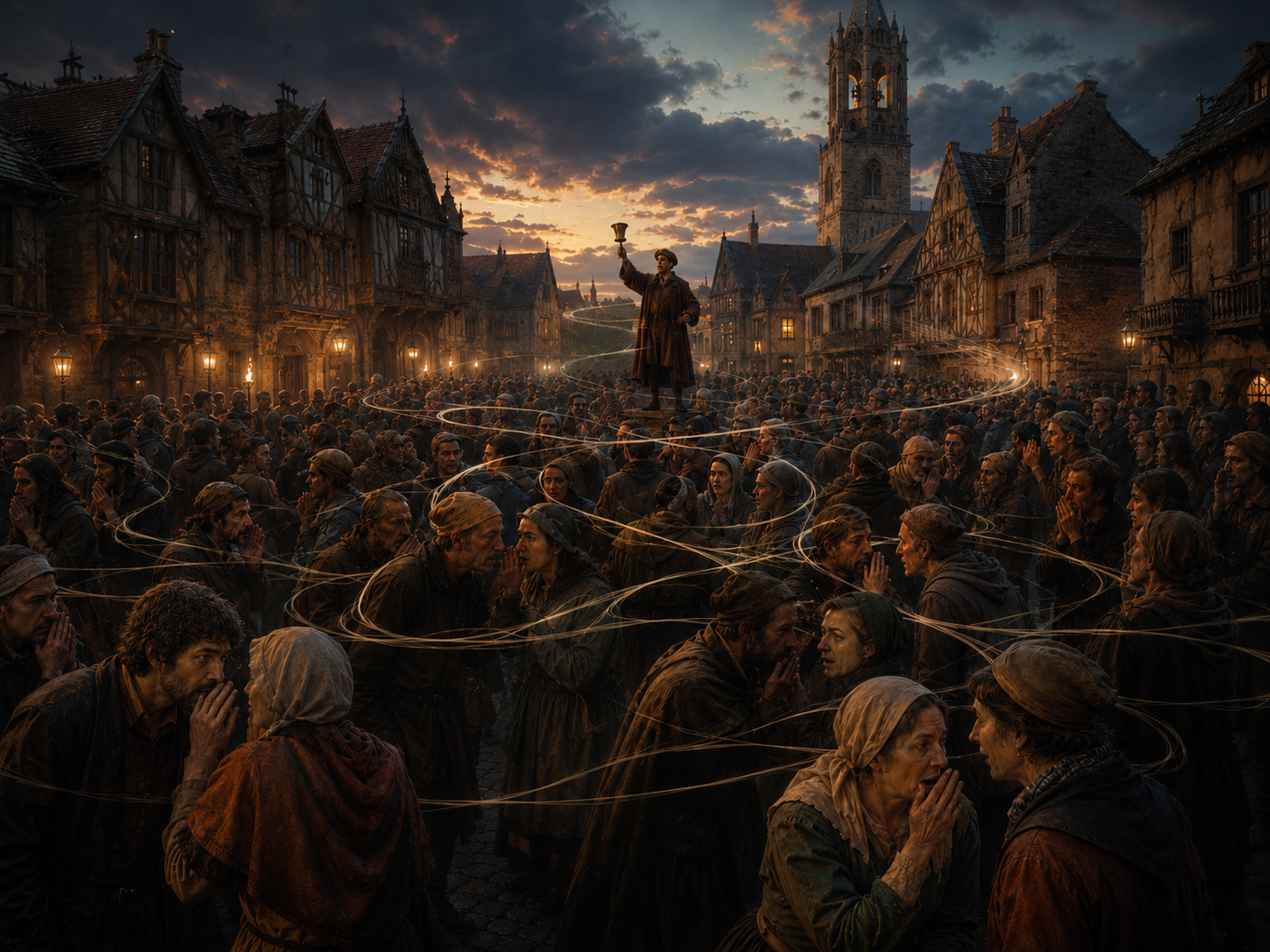
In pre-industrial age, rumours stood for what is provided for us by the media today – the news, entertainment, and a distraction from the monotony of the daily grind. The news, when there was such, travelled slowly, - sometimes, the tidings of a king’s demise or a natural disaster would reach distant towns months after the event; however, once received, it remained current for a duration of time that we would deem unimaginable.
It was exactly this combination of factors that played against the Jews living in exile in Europe and other lands. In the homogenous European society they stood out like a sore thumb: their drastically different manner of dressing, speaking, praying, their dietary restrictions, as well as their deliberate, self-imposed distancing from the local populations made them an object of ridicule, while their economic success often made them a target of suspicion, hatred and violence.
Too many times in history that hatred took the form of a blood libel, namely – Jews were accused of ritual consumption of blood. These false accusations against Jews became one of the most enduring forms of antisemitism in European history. The blood libel against Jews, sometimes referred to as a ritual murder accusation, spread throughout medieval Europe and resulted in persecution, imprisonment, expulsions, and massacres of Jewish communities.
The Absurdity of the Accusations: Blood Prohibition in Judaism
Needless to say, the accusations were false, always and without exception, furthermore – they were absurd. The Torah prohibits the consumption of all and any blood:
“And any man of the House of Israel... who eats any blood, I will set My attention upon the soul who eats the blood, and I will cut him off from among his people. For the soul of the flesh is in the blood...” — Leviticus 17:10-11 (Translation by Sefaria).
It is one of the most severe prohibitions in the whole of the Torah; so much so, that even kosher meat has to be salted through to remove any remaining trace of blood. Transgressors forfeit their portion in the World to Come. All of the above is equally – if not more – relevant for human blood. Yet, the blood libel is one of the most persistent antisemitic tropes in history, which embittered the lives of Jews throughout their exile in European lands. For centuries, anti-Jewish myths and conspiracy theories alleged that Jews kidnapped and murdered Christian children for religious purposes, despite the complete absence of evidence and despite Jewish law explicitly forbidding such acts.
The Case of William of Norwich (1144)
One striking example is the blood libel connected to the name of William of Norwich (c. 1132–c. 22 March 1144). Norwich is a small town in the county of Norfolk, UK, where Jews had established a community as early as 1135. In the spring of 1144, during the Easter festivities, a 12-year-old tanner’s apprentice named William was found murdered. The culprit was never found; instead, the local Jewish community had been accused of murdering him for ritualistic purposes. The William of Norwich blood libel is widely regarded by historians as one of the earliest documented blood libels against Jews in medieval England and a significant milestone in the history of antisemitism. The story was preserved by one Thomas of Monmouth, a Benedictine monk, who wrote the child’s biography, then presented the case for William to be declared a saint, but failed in having him canonized.
So writes the monk:
“In his time the Jews of Norwich bought a Christian child before Easter, and tortured him with all the same tortures with which our Lord was tortured, and on Long-Friday hanged him on a cross for love of our Lord, and afterwards buried him—imagined that it would be concealed, but our Lord showed that he was a holy martyr, and the monks took him, and buried him reverently in the minster, and through our Lord he performs wonderful and manifold miracles; and he is called St. William.”
Thomas of Monmouth interviewed the witnesses of the events for his book (non-Jews only, of course), and visited the place where the body was found. His accusation is based on the fact that William had to deliver skins for parchment to some Jewish customers of the tanner. He was claimed to have been seen by a member of his family going into a home of a local Jew.
The news spread through the town in a matter of hours, with the heartfelt support of the local church figures. Almost at once, the public opinion had judged the Jews guilty of murder. This pattern was common in medieval antisemitism: rumours, religious authority, and public fear combined to create hysteria against Jewish communities.
Trial by "Divine Judgment" and the Creation of a Cult
Members of the Jewish community were summoned by the local bishop to attend court and submit to trial by ordeal, or "divine judgment" (iudicium Dei).
This type of medieval judgement was based on a belief that God protects the innocent from untimely death. During the trial, the accused was forced to either walk on hot coals, or be submerged in water. In the unlikely event of them escaping unharmed, they would be judged innocent. Yet, far more often their death was used to “prove” them guilty. Trials by ordeal reflected the deeply superstitious nature of medieval justice and were frequently used against marginalized groups, including Jews.
However, the local sheriff claimed that Jews could not have this type of trial, as it was reserved for Christians. Following that ruling, the Jews were kept imprisoned in Norwich Castle, their trial pending. Meanwhile, the local bishop attempted to create a cult of the murdered boy. A shrine was built, and the cult was beginning to take off. To this day, the images of the child, presented as a saint, are kept in churches in East Anglia.
Alternative Historical Theories: What Really Happened?
Later-day scholars noted the absence of any proof against the Jews, further undermining the credibility of the medieval blood libel accusations. The British scholar M.R. James claimed that Thomas of Monmouth had manipulated the story to fit his version of events and his own agenda. He pointed out that the “ritualistic” aspect of murder was being promoted by a man who wished to ingratiate himself with the Christian community. Another scholar named Joseph Jacobs speculated in 1897 that William's family had held a mock crucifixion over Easter, which might have killed the child. Furthermore, had the Jews indeed done the deed, they would have to have carried the body through the whole town to get to the place where the body was found, which made their involvement even more unlikely. In 1984, Canadian Medievalist Gavin I. Langmuir wrote that the murder was most likely a sex crime, as the child’s body was naked below the waist when he was found. Modern historical scholarship overwhelmingly rejects the blood libel narrative as a fabricated antisemitic accusation rather than a factual account.
Three engravings of William of Norwich (left to right): from rood screens at Eye, Suffolk and Loddon, Norfolk, and a panel formerly in Saint John the Baptist, Maddermarket, Norwich (Wellcome Collection) (Wikipedia)

The flames of hatred towards the Jews in medieval England were being fanned with much enthusiasm by the clergy, who had instigated the Crusades. The uneducated people, who have never read the Bible for themselves (the first complete English Bible was translated by the Oxford scholar John Wycliffe and his followers around 1382), trusted their holy men, harbouring suspicion and resentment towards the Jews, largely due to the fact that they were foreigners, believed to have been allied with the Normans. Furthermore, many locals wished to obtain the Jewish wealth for themselves. Economic envy, religious hostility, and xenophobia were major driving forces behind anti-Jewish persecution in medieval England. Incidentally, a Jew called Isaac from Norwich had been one of the wealthiest men in Britain during that era. His depiction on a formal document is perhaps the earliest known caricature on Jews: he is portrayed with three heads wearing crowns, as Satan is laughing in the background.

The Gruesome Discovery of 2004: DNA Analysis
In 2004, seventeen skeletons were found in an ancient well, in close proximity to the abbey site in Norwich. Of those, eleven were children. Their burial did not match the customs of the time, as it was too haphazard – they were interned in a pile.
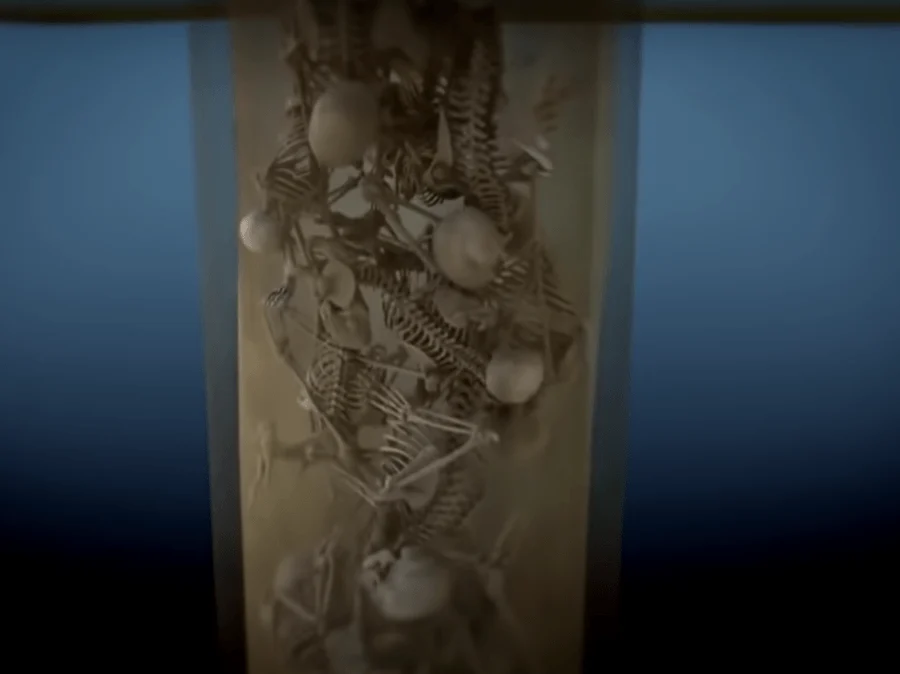
Early hypothesis that claimed that they belonged to victims of the plague was refuted by the researchers, as the skeletons were older than that. Then, genetic expertise revealed that those children had carried the genes of genetic disorders typical for Ashkenazi Jews. There is no historical record of this event – yet the fact remains, - today, as in the Middle Ages, hatred kills. The discovery serves as a stark reminder of the human cost of antisemitism, blood libels, and anti-Jewish persecution throughout history.