
Anatomy of Hypocrisy: Anti-Zionism and Masha Gessen’s Family Secrets
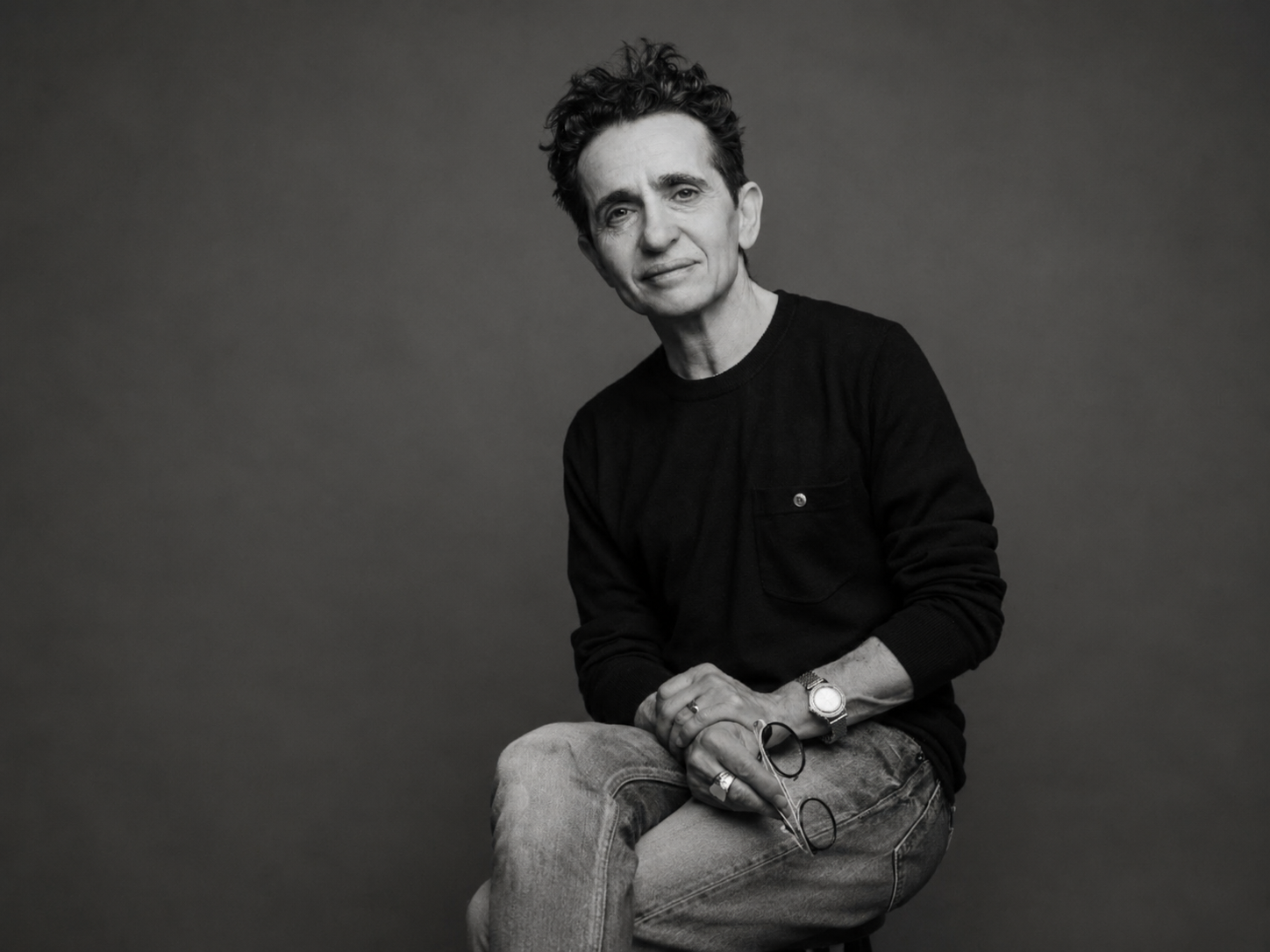
Source The New York Times From Masha Gessen’s article in The Guardian
“While Ester (her paternal grandmother) was in Moscow, her parents were arrested; her mother, Bella, was sent into exile in Siberia. She was later amnestied and Ester decided to join her in Biysk. Her father, Jakub, was held in prison in Bialystok; both Ester and her mother presumed he had been executed. In fact he lasted until the autumn of 1943 and the destruction of the Bialystok ghetto, one of the last to be liquidated. The Soviets abandoned the city to the Nazis when war was declared, and Jakub had been serving on the Judenrat, or Jewish Council, in charge of rationing and involved in drawing up lists of Jews to be sent to the extermination camps. Ester herself came under pressure in Biysk to become an informer for the NKVD, pressure she stead fastly resisted despite the possible consequences for herself and her mother. Also in Biysk she married Boris.”
It is rather curious that “they” compare Gaza to the Holocaust, yet treat their great-grandfather as a victim. Great-grandfather Jakub compiled lists of Jews to be sent to the gas chambers in a concentration camp. In her shoes, I would be, to put it mildly, a much more modest anti-Zionist.
All these stories are peddled primarily as part of a persona of hereditary victimhood. Nothing else matters to her beyond her own popularity and public recognition.
The Family Allegations
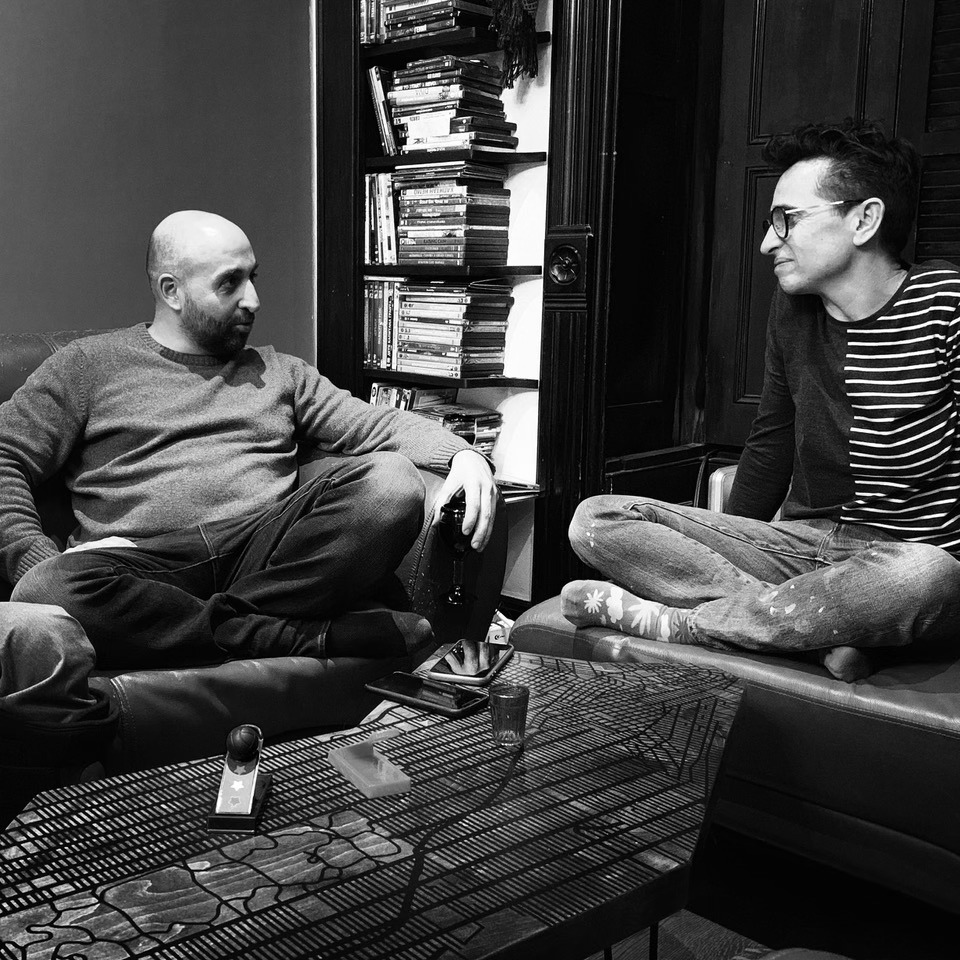 Masha and her cousin Allen Gessen. From his Facebook.
Her cousin, whom she bullied in her New York Times columns, has shared: a drastically different perspective on her career. He publicly described a situation: their grandmother, a Holocaust survivor, wrote a book about their two grandfathers who did not survive it. Masha then allegedly appropriated the book and translated it into English, passing herself off as the author. He essentially accused her of “appropriating” the text, and of effectively causing their grandmother’s heart attack that followed as a result.
Weaponizing the Holocaust: Gaza and the IHRA
In the essay “In the Shadow of the Holocaust” (The New Yorker, December 2023), Gessen explicitly compares Gaza to the Jewish ghettos in Nazi-occupied Eastern Europe (including the Warsaw Ghetto): “For the last seventeen years, Gaza has been a hyperdensely populated, impoverished, walled-in compound where only a small fraction of the population had the right to leave for even a short amount of time — in other words, a ghetto. Not like the Jewish ghetto in Venice or an inner-city ghetto in America but like a Jewish ghetto in an Eastern European country occupied by Nazi Germany. …
The ghetto is being liquidated.”
Gessen harshly criticizes the IHRA (International Holocaust Remembrance Alliance) definition of antisemitism. She believes that this definition — and especially its examples — too broadly interprets criticism of Israel and anti-Zionism as antisemitism.
In that same essay and in various interviews, Gessen criticizes how Holocaust memory is being “hijacked” to justify current Israeli policies and suppress criticism. She argues that the Holocaust is intentionally framed as “unique” and incomparable to anything else so that people cannot draw analogies with other events (including Gaza). This, in her opinion, prevents us from learning lessons and fighting new genocides.
The “No-State” Solution
She prefers (not a two-state solution, but something akin to a “no-state solution” or a confederation — a shared territory without strictly guarded borders between Jews and Palestinians. She is not against Palestinian statehood but considers two separate states unrealistic.
In other words: she is not opposed to Arab statehood (which would be the 23rd such state), but she is opposed to the existence of the single Jewish one.
In her column in The New York Times (June 2025) titled “The Attacks on Zohran Mamdani Show That We Need a New Understanding of Antisemitism,” she explicitly draws a parallel between the accusations of antisemitism against Zohran Mamdani (a candidate for Mayor of New York) and the Stalinist repressions during the Great Terror:
“As I watched a grainy Instagram video of Mamdani choking up during his news conference in Harlem, my mind flashed back to an interview I did many years ago with a Russian historian of Stalinism. During the period known as the Great Terror, hundreds of thousands of Soviet citizens were accused of plotting to kill Stalin or overthrow the Soviet government. Surviving transcripts paint a surreal picture of their interrogations. Detainees would be protesting their innocence. Most were true believers in the cult of Stalin, and the accusation itself was unthinkable to them. But to an interrogator who might see dozens of defendants a day, the historian pointed out to me, the idea that so many people wanted to kill Stalin could come to seem perfectly normal”
Gessen uses this analogy to describe Zohran Mamdani’s situation: for his critics (who accuse him of antisemitism), such an accusation has become a routine, everyday norm, while for Mamdani himself, it feels absurd and painful (she specifically notes how he “choked up” during a press conference).
On a less interesting note, they demand to be referred to by “they/them” pronouns,yet say “I” in interviews.
The grandmother survived the Holocaust, the great-grandfather was an accomplice, and the grandchild is cashing in.
Subscribe to Serge Milshtein for more deep analytical breakdowns, fact-checking of media narratives, and uncomfortable truths.
Sources cited in this article:
- My great-grandfather compiled lists of Jews for the Nazis
- Mamdani's Repression
- The “Exploitation” of the Holocaust
- “It is necessary to compare Gaza to a Nazi ghetto”
- In the State of Israel
Subscribe so you don't miss Serge Milshtein's next posts:
Subscribe to Gaza Bubble on social media so you don’t miss new posts in English.
Related Articles
The Laundromat of Lies: How EU Cash and UN Incompetence Created Sanctions on Israel
A 2025 Regavim study proves that allegations of “settler violence” are part of a fabricated campaign funded from abroad. Read about how the UN and NGOs manipulate facts and impose sanctions against Israel.
Information War: Why Israel and the Jewish People Remain Defenseless Against Propaganda
In the modern world, public opinion manipulation and propaganda are no longer obvious. Today, they hide behind the masks of news pages that allegedly merely inform the audience.
Israel: The World’s Only Contested Nation
While 22 Arab countries and 57 states with Muslim majorities sprawl across continents, the Jewish state is subjected to a unique moral trial—one that ignores historical context, inverts victim and aggressor, and applies standards that no other nation could withstand.